4News -> Information
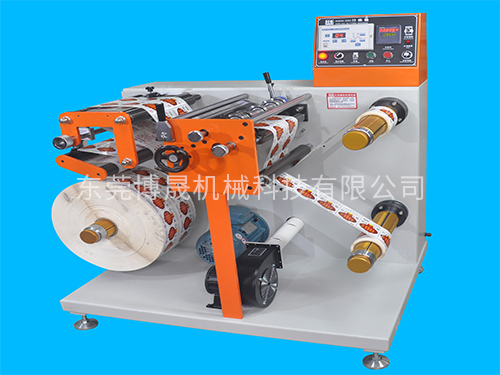
The essence of constant tension control during winding and unwinding processes lies in monitoring changes in roll diameter during operation. As roll diameter varies, the motor output torque of the split-motor system must adjust accordingly to maintain consistent load operation. For V-series inverters, torque control capability enables effective constant tension control during winding. The V-series inverter provides three analog input ports: AUI, AVI, and ACI. These ports can be configured for multiple functions, allowing any one to serve as the torque reference while another acts as the speed limit. A 0-10V signal corresponds to the inverter outputting 0-100% of the motor's rated torque. Thus, adjusting the 0-10V voltage achieves constant tension control. For slitting machines, the roll diameter calculation is typically handled by a tension controller, though implementing this via a PLC architecture is also feasible. This means tension can be set via the HMI or text interface. The PLC then calculates the roll diameter using the formula T = F * D / 2, determining the required motor torque output. This torque value is then sent via analog output to the torque setpoint terminal of the V-series inverter.

 Mobile Site
 Add WeChat


